

WWW.ANDRERIEUMOVIES.COM
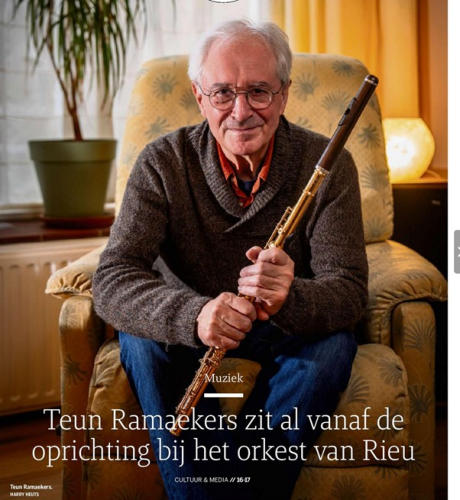
Teun Ramaekers
Flute Player



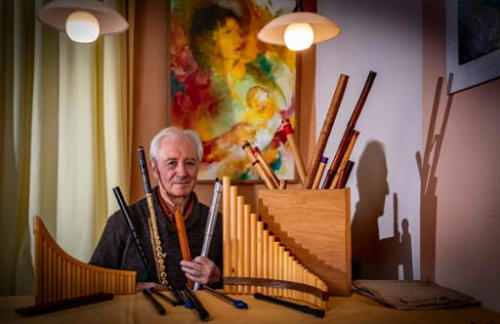
De Limburger, Culture & Media
December 5, 2025
By Ronald Colée
Photos by Harry Heuts
Teun Ramaekers has been with André Rieu's orchestra the longest of all:
'I'll never forget that emergency landing in Reykjavik.'
Andre Rieu and his Johann Strauss Orchestra will begin the fifth annual Christmas concert on
Saturday at the MECC in Maastricht. Teun Ramaekers (71) from Maastricht is also there. The flute
and piccolo player is one of the musicians who has been part of the Johann Strauss Orchestra from
its inception.
"I have an idea. I want to try something. But I don't have the money to pay you out yet. Do you want to
join?" That was the question André Rieu asked Teun Ramaekers 38 years ago. The two Maastricht natives
knew each other from the Conservatory in Liège. Rieu had studied violin there, and Ramaekers had
studied flute, chamber music, and composition. "On the advice of André's father. He and my father knew
each other, so when he heard I wanted to go to the conservatory, Rieu senior said to my father: 'Let him go
to Liège, that education is higher attributed'.
André junior didn't know Ramaekers at the time. "I was five years younger and had been in class with his
younger brother Robèrt. So, I knew about him and had seen André sometimes, but I only really got to know
him on the train to Liège. After that, he came to our class to listen and he was also present at my exam."
Try-out
That experiment became the Johann Strauss Orchestra. "André wanted a more extensive Salon orchestra
with a different sound color, with which he could also play other pieces than just salon music. That's why he
wasn't just looking for classical musicians. He wanted the joy of making music to be paramount. He
preferred things to be a bit looser and more cheerful, a bit less stiff. And he knew I was working with other
genres, like pop and folk."
And so Ramaekers, who had already been teaching at the conservatory for seven years at the time, joined
the Johann Strauss Orchestra, which had only twelve musicians. "That quickly grew to twenty or twenty-five
with the addition of trumpeters, percussionists, an accordionist, and extra strings. A very pleasant group of
people. Back then, almost all of us were in our twenties and thirties. André and I, along with bassist Jean
Sassen, were the oldest."
When the big breakthrough came in 1995 with the Second Waltz, Ramaekers gave up his job at the Liège
conservatory and became a full-time musician with Rieu. "We toured extensively throughout the
Netherlands for the Second Waltz. Those first years were a real adventure. We traveled to all the city
theaters and gave about two hundred concerts a year. Now we only do about a hundred. Our technical
team back then consisted of just father and daughter Druif, and all the materials—some decor pieces and a
few more lamps—fit into one small truck."
A bold step
Giving up his job was a bold step. "I was already married to Lucile, had two young sons who are now 40
and 38, and so I followed my heart, not my mind. I thought I probably wouldn't play with the Johann Strauss
Orchestra until I retired. We were successful, but the question was for how long. However, the atmosphere,
was the decisive factor. If I had continued teaching, I would certainly have gotten a burnout. And now, 38
years later, I'm years past retirement age, and I'm still a member of the orchestra. So afterwards, I can say I
made the right decision at that time."
The fact that Ramaekers has a slight advantage over the maestro is evident from the fact that he is the only
one allowed the freedom to improvise. "Because André knows I used to do that before I joined the
orchestra. But I only improvise on the more relaxed music. With classical music, we follow the composer. If
he hears me play a beautiful line during a rehearsal or performance, he says: wonderful, just leave it. For
me, however, it's a challenge to play something different every evening. In the beginning, for instance, we
played Adieu, mein kleiner Gardeoffizier, very closely. Now we've been playing that piece in three parts on
the piccolo for years. That was never in the sheet music, but arose from a spontaneous invention."
Even as a grandfather of three granddaughters, Ramaekers still travels the world with Rieu. The most
beautiful places we've played? South America comes to mind first, because of its exuberant and exotic
atmosphere, the colors, and the smells. Every performance there is one big party. But the relaxed
atmosphere in Australia also really appeals to me. The people there are just as enthusiastic, but less
boisterous. Japan, where we've been five or six times now, also remains very special because of the
completely different culture. I only had to miss our trip to China in 2014 because I was operated on my
hand.
Emergency landing
Incidents he will never forget include fleeing the unrest-ravaged capital Santiago, Chile, within an hour in
2019 and an emergency landing in Reykjavik. "An engine had failed. We didn't even notice. Only after we
landed and saw all those ambulances and fire trucks parked next to the runway and the white lines around
the flight attendants' noses did the seriousness of the situation sink in. Although the pilots reassured us that
evening at the bar that this happens so rarely that we'd have to keep going for another 38 years before it
happened again."
The memory of the first Vrijthof concert in 2005 also remains indelible. "Before that, we had played in the
bandstand on the Vrijthof square once before, with Beppie Kraft or someone like that. But there was no
comparison. What amazed us was that André immediately managed to fill the entire square that first time.
And with Benny Neyman as a special guest, who would pass away three years later. André had, of course,
worked incredibly hard to make it a success, but that first time, it seemed as if everything went smoothly.
That theatrical atmosphere he managed to create in the open air, and the audience's enthusiasm that
evening, will stay with me forever."
For 38 years, Ramaekers has witnessed firsthand how everything on the Vrijthof square contributes to the
atmosphere. André wants to give people a good, enjoyable time. And that also applies to the Christmas
concerts. As a musician, you don't even realize you're playing in a building anymore. He transforms the
MECC into one big Christmas market with a Dickensian atmosphere, complete with an ice rink and brass
ensembles playing Christmas carols on every street corner.
Social media
He's pleased to see that the audience is also getting younger. "Initially, there were mainly retirees in the
audience, but now you see more and more middle-aged visitors, including children. I think that's also
because André and his orchestra have become very active on social media. And so, he offers two
completely different experiences in his hometown. In the summer, that global atmosphere in the sunshine
with a good glass of wine, and in the winter, that cozy, warm, and welcoming atmosphere."
How long will Ramaekers continue?
If it were up to him, a very long time. "I'm 71 now, but I still love doing it. I'm healthy and can still play well.
So there's no reason to stop. Although, of course, I have to keep things going with my family. In that
respect, it's nice that we're no longer doing two hundred performances a year, but only half that. Partly
because the venues where we play have become much bigger. Although there are also the necessary
rehearsals and CD recordings in the studio in Amby. But you don't notice those. They feel just like you’re
going to have a cup of coffee with each other."



- Maastricht Dinnertime
- Maastricht Preparations
- Tickets & accomodation
- Ticket Mediation
- Trains from Amsterdam Schiphol
- Trains from Brussels, Paris, Frankfurt and London
- Maastricht Fan Dinner
- Maastricht Fan Picnic
- Maastricht City Walks
- Maastricht Mosasaurus
- Daytrips from Maastricht
- Vrijthof news
- Maastricht Bonbonniere
- Maastricht ENCI quarry

- 2026 - 2030
- 2021 - 2025
- Previous items 2025 Jul - Dec
- Maastricht 2025
- Previous items 2025 Jan - Jun
- Previous items 2024 Jul - Dec
- Index of this period
- Doctor Peter de Beer
- Phil Bee
- Carlo Bonnie
- André’s Castle De Torentjes
- André gets his own stamp
- Typewriter artist
- Duo X-Elle
- Cinema experience 2024
- Quote Business Magazine
- Concerts in Bogotá, Colombia
- Margriet Magazine (1)
- Margriet Magazine (2)
- André Rieu turns 75
- André’s 75th birthday party
- Concert in Milano
- Roadsoap 5
- Presentation of second biography
- Het Financieele Dagblad
- 2024 Christmas concerts
- Interview with Marjorie
- Interview with André Rieu
- Interview from Nous Deux
- Dorona Alberti looks back
- Maastricht 2024
- Previous items 2024 Jan - Jun
- Index of this period
- Kimberly Smith
- Amsterdam New Year's concert
- MAX Magazine
- Stradivari instruments
- Golden Carriage
- Bahrain concert
- Ineke's book
- Emma's birthday in Greece
- Organic carrots
- Mexico Illness
- New animated series
- Trio SAAMN
- Andre Rieu in cinema 2024
- Sculpture of Andre Rieu
- Making of the bull
- Book 75 year Andre Rieu
- Previous items 2023 Jul - Dec
- Maastricht 2023
- Previous items 2023 Jan - Jun
- Previous items 2022 Jul - Dec
- Index of this period
- December with André
- Ivo on Sunday
- World Record Academy
- Privé / Telegraaf
- Two Vienna concerts
- Pierre Kartner (Father Abraham)
- Shellfish from ENCI quarry
- Zagreb concert
- Great Maastricht Dictation
- South America Tour
- Tribute to Queen Elizabeth II
- Rose Festival in Lottum
- Photo exhibition William Rutten
- Fake tickets on sale
- L1 interview
- Rieu and the Royals
- Interview with Pierre Rieu
- Efteling News
- Announcement Christmas concerts
- Boundlessly popular
- Maastricht 2022
- Previous items 2022 Jan - Jun
- Previous items 2021 Jul - Dec
- Index of this period
- LINDA's Winterguests
- Max Verstappen World champion F1
- Lisbon concerts
- Christmas cinema movie
- Koffietijd program
- Christmas concerts 2021 postponed
- Mindfuck
- ARD1, Club1 program
- Promoting Portugal tour
- Limburg Central article
- Andre's birthday
- Kingsday 2022 in Maastricht
- Podcast: weird hit wonder
- NDR talkshow
- 10 Christmas concerts in the MECC
- Vera Russwurm interview
- Flooding benefit program
- Humberto interview
- Flooding in Limburg
- Two best friends, Andre and Andre
- Previous items 2021 Jan - Jun
- Index of this period
- Maastrichts dialect
- Playing again!
- OP 1 Interview
- Vrijfhof 2021 concerts postponed
- Covid Vaccinations
- EVC Congress
- Julia and Kathy
- L1 Interview
- 3 AW Nights interview
- Dutch Bake-Off
- Chinese Interview
- Rijsemus Violin builder
- Al-Jazeera Interview
- Blaaskracht
- PRESS info
- Happy New Year
- 2015 - 2020
- Previous items 2020 Jul - Dec
- Previous items 2020 Jan - Jun
- Previous items 2019 Jul - Dec
- Maastricht 2019
- Previous items 2019 Jan - Jun
- Previous items 2018 Jul - Dec
- Maastricht 2018
- Previous items 2018 Jan - Jun
- Index of first half 2018
- June 26th, VNG Congress
- May 13th, Duckrace
- May 12th, Professor Scherder
- May 11th, Time for Max
- Bulgaria concerts
- Fake Rieus
- April 2018, Tel Aviv
- East USA Tour
- MDR Um 4, March 26th,2018
- May 9th, Sandy beach radio
- Universal Music Award
- Semper Opern Ball
- New Years Concert Amsterdam
- Previous items 2017 Jul - Dec
- Lift-Off Splash Percussian School
- Index of 2nd half 2017
- Carmen Nebel show
- Christmas Events 2017
- Interview with Frank Michael
- Celebrity Radio interview
- UK Tour 2017
- USA Tour 2017
- German Tour 2017
- Q&A with fans on Facebook
- Sunday Night Interview
- Mexico Donation
- Day-Time in Maastricht
- RTL Helemaal het einde
- ARD Brisant
- NDR Tietjen and Bommes
- Making of Cinema video
- Maastricht 2017
- Previous items 2017 Jan - Jun
- Index of first half 2017
- Interview with Steven Wright BBC2
- Portrait of a Passion
- The "Real" Andre Rieu
- Welcome to my World 2
- Double interview Andre Rieu and Jo Cortenaedt
- Mirusia "From The Heart"
- Larura Engel "En Canto"
- Refugee brought Andre Rieu success
- Carla Maffioletti "A Dream"
- Venetian Carnival Revelers
- Golden Oldie from 1985
- Agnes Fizzano's shop
- Carnival speech Mayor of Maastricht
- Maastricht Pastry Route
- 2017 Valentines day
- Rieu plays in Semper Oper Dresden
- Linda Custers, Princess Carnaval
- New Years concert Ziggo Dome
- Ziggo Dome rehearsal
- Previous items 2016 Jul - Dec
- 2016 Jul - Dec, Index
- SBS6 Stars Surprise Show Dec 21st, 2016
- Liverpool december 2016
- Magic Maastricht 2016
- BBC Breakfast Today Show
- ARD Advent Show
- Two Million Likes
- CinemaLive Christmas
- SWR 4 German TV
- Strictly Come Dancing
- The meaning of life
- Leute Heute
- Dancing with the Stars
- In Conversation
- Free Mini Concert in Maastricht
- L1 Radio Interview
- Josti Band 50 years
- NDR Talk Show
- New Maastricht Salon orchestra
- Rieu in Cinema
- Maastricht 2016
- Previous items 2016 Jan - Jun
- Previous items 2015 Jul - Dec
- 2015 Jul - Dec, Index
- Rieu entertainment
- Dec. 2015, Bild Star Magazine part 4
- Dec. 2015, Bild Star Magazine part 3
- Dec. 2015, Bild Star Magazine part 2
- Dec. 2015, Bild Star Magazine part 1
- Nov. 17th, 2015, RTL Boulevard
- Nov. 12th, Shownieuws
- Nov. 16th, Loose Women
- Oct. 30th, Colectiv Club Fire, Bucharest
- Roman Holiday (3)
- Roman Holiday (2)
- Roman Holiday (1)
- Oct. 26th, Classic FM Q&A
- Oct. 23rd, MDR at 4 PM
- Oct. 10th, Jubilee Award
- Sep. 19th, 2015, Carmen Nebel
- Maastricht 2015
- Previous items 2015 Jan - Jun
- 2015 Jan - Jun, Index
- Code M, the movie
- Bucharest Concerts Part 1
- Bucharest Concerts Part 2
- A Latin Breeze
- Maestro without borders
- Copenhagen Concert
- Brazilian Fans
- George Harper In Memoriam
- Press Conference Romania Open Air Concerts
- RTL Late Night Show
- AvroTros TV Show
- Cologne Concert
- Valentine's day
- Tempeleers Carnaval Medal
- Markus Lanz Talk Show
- 2007 - 2014
- Previous items 2014 Jan - Jun
- Maastricht 2014
- Maastricht 2014, The Preparations
- Maastricht 2014, (Dress) Rehearsal
- Maastricht 2014, The Concerts
- Maastricht 2014, Fan Dinner
- Maastricht 2014, Three Fan Picnics
- Maastricht 2014, Lift-Off
- Maastricht 2014, Exhibition Marc Rieu
- Maastricht 2014, Our Story Page 1
- Maastricht 2014, Our Story Page 2
- Maastricht 2014, Venetian Carnival, the making of
- Previous items 2014 Jul - Dec
- Previous items 2013 Jul - Dec
- Advent Calendar 2013
- Spirit of Christmas
- Nelson Mandela
- Movie Marina
- BBC Breakfast Show
- German TV programs (1)
- German TV programs (2)
- L1 Late November 5th, 2013
- RTL Boulevard, October 31st, 2013
- Amira Willighagen
- Evenblij with....
- Australian tour 2013
- German TV Sept.2013
- ORF Vera Russwurm
- Jean-Philippe composes ode to Mary
- Tietjen and Hirschhausen 2013
- Rieu to play on North Pole?
- Maastricht 2013
- Previous items 2013 Jan - Jun
- RTL Boulevard June 19th, 2013
- Jean-Philippe's children's books
- What I know about women
- AR-Academy
- Copenhagen concert
- SkyArts2
- Limbourgeois April 30th
- The making of the Coronation concert
- King's inauguration Day 2
- King's inauguration Day 1
- King's Waltz
- Charity TV broadcast
- classicFM interview
- Trini Lopez
- Jean-Philippe's book
- Jermaine Jackson
- Dutch Queen Abdicates
- history fan websites
- Cologne, Jan.1st 2013
- Previous items 2012 Jul - Dec
- Limbourgeois 25 December 2012
- Chistmas in Birmingham
- Linda Magazine, December 2012
- Advent calendar
- Cinema Heerlen 2012
- Boulevard Nov 21, 2012 and Ajax
- André's Birthhouse
- UK TV Programs November 2012
- Classic Brit Award
- Andre in Brazil 2012
- Interview Dolman Rieu
- BVN Trophy 2012
- Westland Fruit and Flower parade
- L1mbourgeois August 19, 2012
- Maastricht concert 2012
- Previous items 2012 Jan - Jun
- Previous items 2011 Jul - Dec
- Maastricht 2011
- Previous items 2011 Jan - Jun
- The person behind the phenomenon
- Andre and Hopkins
- Interview in Vienna
- Frank Steijns and "Normaal" band
- PBS visiting Maastricht 2006
- Amsterdam ArenA 2011
- Pierres Hobby
- DWDD May 26th, 2011
- Madiwodovrijdag show
- André Rieu and Anthony Hopkins
- Mirusia DVD release
- Scary moments in South Africa
- BUMA Export award 2010
- Interview with Mirusia
- WDR swap reporter
- Previous items 2010 Jul - Dec
- Platin Tenors at the Cologne Christmas market
- Koffietijd December 20th, 2010
- Christmas concert by Mirusia
- Today Show December 18th, 2010
- Ice Sculpture Maastricht 2010
- The André Rieu Story
- UK November 2010 appearances
- Mexico City, November 28th, 2010
- Ivo Niehe interviews André Rieu after his illness
- André is Back!!
- LeuteHeute 151110
- André is rehearsing again
- First interview after sickness
- André cancels UK and Aussie 2010 tour
- Jubilee book 30 years André Rieu
- Interview with Pierre about André's ilness.
- Three hours marathon interview
- André escapes Toronto
- Previous items 2010 Jan - Jun
- Maastricht 2010
- Maastricht Winery, South Africa
- The best of Thirty Years André Rieu
- Mainau 2010, "Roses from the South"
- Dancing on Ice, 2010 UK finals
- Maastricht Stampsheet
- André to play for Queen Beatrix of The Netherlands
- At home with Bela Mavrak
- Export award 2009
- Farewell mayor Leers
- Flikken Maastricht
- Cologne 2010 concert
- Previous items 2009
- André and Friends ArenA 2009
- André's 2009 Christmas interview
- Christmas with Carmen Nebel
- Frank Steijns carillon
- Dutchman of the Year 2009
- Royal Variety Performance
- Brisant
- Dreams come true
- André's twins
- MDR André 60th birthday interview
- Sydney Oct.2009
- Ivo Niehe's interview with Mirusia Louwerse
- Maastricht Liberators
- Heidelberg September 2009
- Maastricht 2009, the concert
- Maastricht 2009 update
- America Tour 2009
- The week of André Rieu
- André in Villa VANTHILT
- Boulevard and Knevel and van den Brink
- André Rieu about New York
- Carmen Nebel in Maastricht
- André named best selling male artist
- André Rieu Stamp Booklet
- Maastricht 2009
- Interview with André on RTL9
- Marc Rieu, the other son
- Andre Rieu on his way to Australia
- André and Vegemite
- Ruud and Ineke meet Kathi (Caramia)
- Road Soap review
- André in de ArenA
- André get awards
- Good afternoon Limburg
- van der Vorst ziet sterren
- Previous items 2008
- Australian interviews with André
- Holiday in Australia
- Ivo Melbourne
- From Maastricht to Melbourne
- Interviews December 2008
- Melbourne Concert 2008
- Trier 2004
- Dresden
- Kerner and Nebel
- Maastricht but different
- Maastricht Vrijthof concert 2008, the highlights
- 60 Minutes, André Rieu and Andrea Bocelli
- Maastricht 2008 concert
- Aussie Interviews
- André in Ottawa
- Andre Rieu Tulips in Ineke's garden
- Ovation-Schofield
- De Rode Loper
- Boulevard
- Riverboat
- The Last Show
- Benny Neyman
- Ivo Niehe March 2008
- Kruispunt
- Tietjen and Dibaba
- Toronto by Alice Leung
- Toronto 2007
- Cologne 2008 concert
- Previous items 2007

- Agnes Fizzano-Walter
- Anna Majchrzak
- Anna Reker
- Annabelle Traves
- Béla Mavrák
- Bibi Ortjens
- Boris Goldenblank
- Brass section
- Carla Maffioletti
- Carmen Monarcha
- Christina Petrou
- Cord Meyer Leusink
- Donij van Doorn
- Els Mercken
- Emma Kok
- Frank Steijns
- Gary Bennett
- Gosia Tarnowski
- Gracenotes
- Jean Sassen
- Joline Soomers
- Justinas Kaunas
- Kimmy Skota
- Kremi Minerva
- Laura Engel
- Lift-Off (Marcel Falize)
- Marcel Falize (1)
- Maja Jasinska
- Maastricht Salon Orchestra
- Manoe Konings
- Michaela Oeste
- Michel Tirabosco
- Mirusia Louwerse
- Night of the Proms
- Pierre Rieu
- Platin Tenors
- Rene Henket family
- Roger Diederen
- Ruud Merx / Lin Jong
- SAAMN trio
- Sanne Mestrom
- Serena Vanheuverswijn
- Stéphanie Detry
- Suzan Erens
- Tanja Derwahl
- Tiroler ohne Berge (Marcel Falize)
- VerrasSing
- Vincenzo Viola



- 2000 - 2009
- 2009: Andre meets Mr. Wijdbeens
- 2006: Josti Band
- 2006: Profiel
- 2005: Art Express Classic
- 2005: Interview with Catherine Keyl
- 2004: Portrait of a Passion
- 2004: André van Duin meets André Rieu
- 2004: Trier concert
- 2004: Rehearsal for Tros 40 year song
- 2003: Barbara Wussow
- 2002: TROS Cruise
- 2002: Barend en van Dorp
- 2001: José Carrera Gala
- 2001: The Ländler
- 2001: Open House
- 2000: BZN meets André Rieu
- 2000: A Dream Come True
- 1989 - 1999
- 1999: Andre @ Spanish RTVE
- 1999: Laat de Leeuw
- 1999: Alfredissimo
- 1998: Lesley Garrett
- 1998: Celebrities
- 1998 Early JSO
- 1997: Strauss Party - Kiel
- 1997/98 Bill's oldies 2
- 1997/98 Bill's oldies 1
- 1997: Im Krapfenwald
- 1996: Snow White, a fairytale
- 1996: André Rieu "In Concert"
- 1996: Charity Concert
- 1995 André and André
- 1995: Wiener Melange - Lübeck
- 1995: Karel van der Graaf
- 1995: Musikantenstadl
- 1995: TROS Op nieuwe toeren
- 1995: Carré Theatre (The Vienna I love)
- 1995: Veleta
- 1995: TVcommercial/A.van Duin
- 1995: First videoclip
- 1995: Angela's Challenge
- 1994: Schutterij EMM Ooy
- 1994: Strauss & Co
- 1994: Olympic Stadium
- 1992: Before he got famous
- 1989: Tineke's TV years
- Tour Programs 1987/88
- Tour Programs 1994/95
- 1985





