ANDRERIEUMOVIES.COM

2026 Press articles (page 2)
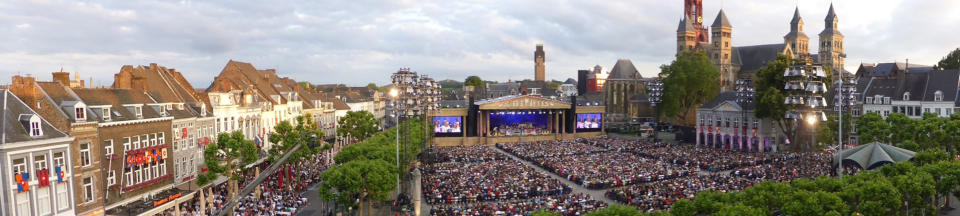
Vrijthof concerts 2026


Sharing a July 12, 2026 interviewing article from The Telegraph (UK)
by Guy Kelly. © Stephan Farrell
(Found by Diana D. Le)
André Rieu: "My parents were afraid of me"
The 76-year-old King of the Waltz on living to 140, his controversial arena tours and seeking the adoration
he never received as a child.
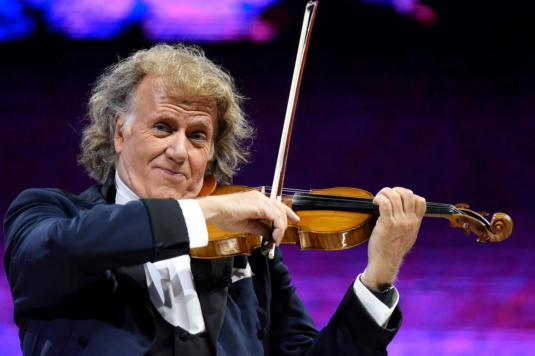
André Rieu would like to issue a correction. When this newspaper interviewed the Dutch violinist conductor,
impresario and “King of the Waltz” seven years ago, he told us that he intended to live to 1,000.
“I would love to do it,” he said, citing the work of Professor Aubrey de Grey, the British biomedical
gerontologist and author of Ending Ageing. “I think it’s possible. From the moment that he says, ‘OK, we
are ready to trial,’ I’m there. I’m first.”
That was in 2019, when Rieu was 69. He is now 76 and, while he’s as vivacious as ever, he’s revising his
lifespan. “I don’t want to live forever, but I think it’s possible now, without tricks and without pushing it, to be
140.
“It’s achievable, I think. I don’t smoke, I don’t drink anymore, I do my sport every day with a personal
trainer. In fact, just yesterday my trainer was saying 100 is going to be the new 80, 120 the new 100. So…
I’m trying.”
Firmly in middle age, then, Rieu looks well. “I’m in my castle,” he announces over Zoom, spinning to take in
the ballroom from which he answers interviews. Rieu has owned the 16th-century De Torentjes Castle, in
his hometown of Maastricht, for more than 30 years. It was once owned by Count d’Artagnan, made
famous by Alexandre Dumas’s The Three Musketeers.
Today, its current swashbuckling owner sits on a gold chair, in a room filled with round tables covered in
deep crimson tablecloths. On the wall behind him, gilt-framed oil paintings of Rieu stare out. “The castle is
really my office,” he says, “I live next door.”
He is in his familiar tortoiseshell spectacles, and a sky-blue and sunflower-yellow checked suit. The hair
remains a wonder: swept back by the gales of applause he is met with every night, and worn long, in a
fashion popular for men in the late 18th and early 19th centuries. Critics have said he’s trying a little too
hard to evoke Beethoven; being worth something close to £40m, though, Rieu could probably buy
Beethoven’s actual hair, if he wanted.
He is now one of the best-selling classical artists in the world, with 45 million albums sold and, at one point,
performing to 600,000 people annually. Next year marks 40 years since Rieu and his wife of half a century,
Marjorie, started their Johann Strauss Orchestra, building it from 12 musicians into a 60-piece, globally
touring beast with 100 support staff and some of the most elaborate stage sets around.
Every concert – show, really – is a riot of colour, with mocked-up Habsburg palaces, ice rinks, and balls.
The men in the orchestra wear tails and the women wear low-cut satin gowns and puffed sleeves, like
Disney princesses. Rieu approves every last sequin.
All the music is light, all the time signatures are adjusted to be waltz-able, even if they perhaps shouldn’t
be, and Rieu, who slowly leads the players onstage from the back of the often stadium-sized arenas,
conducts things with a perma-grin. He is met by raptures.
“The result is always the same: people go home with smiles on their faces, and they have an evening
which makes them say, ‘Oh my God, I forgot the whole s--- of the world.’
“And that is why we travel. I want to grab them by the heart and make them forget everything. I’m not
travelling like a priest, of course, but the result is the same. It’s escapism."
Not everybody sees it that way. Rieu’s detractors call him the “King of Schmaltz”. His music is too popular,
they say. Too jaunty. Too garish. Not respectful enough.
“Very often people say about my pieces, ‘Ugh, it’s kitsch. But I don’t understand why people say that,
because it’s simply with more feeling. Why is it too popular? What is too popular?”
He is no fan of what he sees as the “proudly elitist” types in the higher arts. “It’s that thing of, ‘You don’t
understand this music, so you are not with us. We are here and you are there.’”
He is treated with “suspicion” by that crowd, he says. “They think I do it with tricks and all that, but there’s
no tricks. It’s simply that I am like that. And I choose musicians around me who are happy to play with me.
That’s it.”
In fairness, it is not only classical music snobs who are left cold. There exists a thread on the online forum
Mumsnet that begins: “Just watching [Rieu’s] Christmas show on TV. He is like some kind of wizard. All
those facial expressions, What is going on? The audience [is] obsessed!” The top reply reads: “I’m sure he
is the leader of a cult which attracts pensioners.”
In fact, he says his audience is “growing and growing” thanks to Spotify and YouTube. And getting younger,
too, though he concedes that young people often “come to the concert by accident” or get indoctrinated by
a grandparent.
Fans used to send him gifts, but now he has to tell them not to, because the internet is rife with fake Rieus:
AI-generated videos saying he’s dead, or injured, or impoverished. And his acolytes are all too ready to
open their purses.
“That’s troubling us a lot. I read that it comes from Vietnam. There are young, highly educated technicians
who make all these [videos]. There was one lady, a fan of mine in Puerto Rico, who paid €35,000 to these
guys, thinking she’d paid it to me because my castle needed a renovation.” He looks desolate. “Not good.
But it’s a part of life nowadays.”
Rieu sees his orchestra as a family, and he’s the patriarch. His own father, André Sr., was a conductor who
ran the Limburg Symphony Orchestra, in Maastricht. Rieu took up the violin aged five, and later spent 11
“miserable” years as his father’s principal second violin.
“He was more or less a dictator. He picked on the weak people. I didn’t like that. He was not very
sympathetic. I thought, OK, I’m going to do things a different way.”
The third of six siblings, Rieu was extremely talented, but, as he previously told The Telegraph, his father
never said he loved him and his mother told him she got a hernia carrying him and thus he would “never
amount to anything”. It’s difficult to see why they wouldn’t simply be proud of him.
“Exactly, ask them. They are dead, but when I think about them now, I think they were afraid of me. They
couldn’t cope with me being as I am. My mother always said, ‘Don’t look people in the eyes, André, that’s
not polite.’ But that’s what I do. Yes, I think they were afraid of me. It’s the first time I’ve said that.”
Of course, Rieu went on to ensure he would never have a love deficit again. Every night, thousands of
people adore him. He initially scoffs at this thought. “You think it’s a compensation for my youth? You think
I’m looking for admiration every day?” Well, you’ve certainly built the supportive family you never had…
There is a pause. “Yeah, that’s true. You could explain it like that.”
It hasn’t always been serene. In 2008, he infamously built a replica of Vienna’s Schönbrunn Palace,
complete with ice rink and a carriage covered in actual gold, for a tour in Australia. Expecting to fill five
stadiums, Rieu only managed two, and thus was saddled with £30m of debt.
He and Pierre, his manager and younger son (now 45; his brother, Marc, is 48), sat in a bank all day,
remonstrating. “A young guy from the bank said to the others, ‘Let him play, because that’s the only way we
can get our money back.’ And he was right.”
He was indeed. Rieu’s tour the following year sold 1.1 million tickets, becoming the sixth-highest-grossing
of the year, above Britney Spears, Tina Turner, and Coldplay.
And now he is going back on the road. A residency in Maastricht, where he is beloved (“I am, actually. I
make a lot of money for them”), precedes a run of arenas in Britain, then he circles around Europe until
well into next summer.
Every stop has the same schedule. “We have a little soup, sound check, dinner together. I go to sleep, they
go into town, then we have our concert. I don’t explore cities. I’m going to do that when I’m 120.”
Some locations are too dangerous. They were booked to play in Russia, then the war started. They were
due to play in Bahrain, but then war broke out in the Middle East. They’ve played Israel but wouldn’t now.
“It’s too dangerous. All 130 people must agree, and they trust in me.”
But he loves Britain. Some 50 years ago, it was seeing the Last Night of the Proms on television that first
showed Rieu how lively classical music can be. “There is this joy, this looseness, normally [at concerts] the
audience is very disciplined. I heard you can only go to the Last Night if you’ve seen 10 Proms?”
He means the “five-concert ballot” (one of several ways you can acquire tickets, in fact), and he approves.
“Because then you get a good audience, not like the New Year’s concert in Vienna. That’s spoilt, because
there are only Japanese sitting there for a lot of money. That’s not good.”
Rieu recently found out he’s going to be a grandfather for the sixth time, and is already planning his 80th
birthday party, which sounds similar to his nightly concerts (“dancers from all over the world, I’ll play the
waltz…”), but age cannot wither him.
In fact, he now books the hotel suite next to his own to use as a gym, having been inspired by actor and
former wrestler Dwayne “the Rock” Johnson, who famously takes his “Iron Paradise” weights room
wherever he goes. “I thought, if the Rock can do that, I can too.”
Alas, there are some things he can’t outrun. “I play less,” he laments. “The muscles in your hands are
completely different when you’re older. But that’s normal.” He smiles. It isn’t frustrating for him. “Now, when
I hear my old recordings, I think, ‘Oh my, that was beautiful. That was me.’”
Sharing a July 12, 2026 article from 1zuid.nl.
Words and photos by Laurens Bouvrie
Translated by Diana D. Le
For ten years, Kimberly Smith has been the star of the Viennese
waltz spectacle at André Rieu shows
While this marks the 20th edition of the Vrijthof Concerts for André Rieu and his Johann Strauss
Orchestra, Kimberly Smith is also celebrating a milestone this year. The owner of the Maastricht
dance school bearing her name has been responsible for one of the most visually impressive
elements of the Maastricht maestro’s shows for the past ten years. In 2016, she surprised the
audience with 75 couples on the Vrijthof; at the 2026 edition, 150 couples from the Benelux
countries and Germany will steal the show with a Viennese waltz set to "Lara's Theme" from
Doctor Zhivago.
Laurens Bouvrie's first report in words and pictures for 1Zuid focuses on Rieus' second weekend at the
Vrijthof in general, and on Kimberly Smith and The Maastricht Dance Company in particular.
Dancers
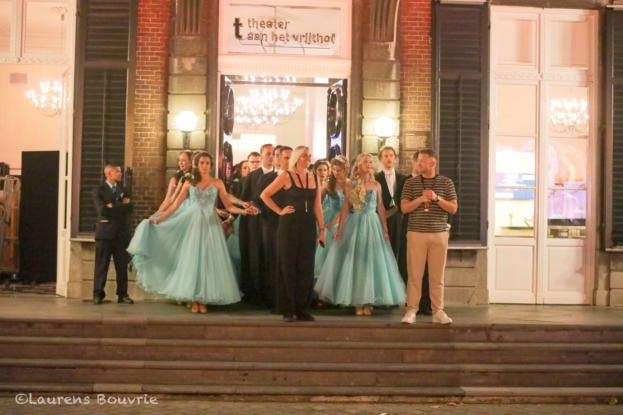
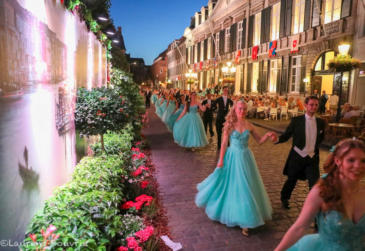
It’s fifteen minutes after intermission when Kimberly Smith appears on the steps of the Theater aan het
Vrijthof. While André Rieu, as is his custom, tries to get a sense of which countries his fans are from, the
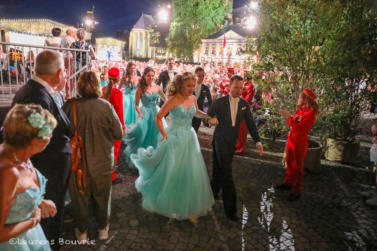
Maastricht-based choreographer double-checks the details one last time. Fifteen minutes later, a
seemingly endless line of women in sky-blue ball gowns, men, and a number of women in tailcoats pours
out of the Theater aan het Vrijthof. A little earlier, the dancers in wheelchairs had already taken their
positions at the corner of Vrijthof and Grote Staat. The Half-Hour Viennese Waltz is about to begin.
Assignment
The former Dutch ballroom champion—who even reached the quarterfinals of a World Championship
once—does more than just add an extra dimension to the Vrijthof concerts by André Rieu and his Johann
Strauss Orchestra. What was first presented to the public on the square in 2016 has since become a
regular feature of the Rieu show, and not just in Maastricht. Kimberly Smith: “When André approached my
father to recruit dancers for the Vrijthof concerts, he managed to convince André that I would be the right
person for the job—including the choreography. A unique challenge awaited me.”
Not Easy
Ten years later, André Rieu proudly announces The Maastricht Dance Company night after night. And it’s
no longer just in the Stehgeiger’s hometown. The first performance and those that followed were a huge
success—so huge, in fact, that André Rieu decided to ask Kimberly Smith to do this more often. “Of
course, I was all for it. The first edition with the ballroom dancers taught me that getting everything just
right wasn’t exactly a piece of cake.”
Kimberly Smith’s approach to recruitment was simple but intensive. “I just started calling all the dance
schools. If any dancers were interested, I would go visit them. Even for just one class, that was a huge
undertaking. In the years that followed—André asked me if I could turn 75 into 100, and a few years later
into 150—it became clear that I would also have to look for dancers in Belgium, Luxembourg, and even
Germany.” Just like André Rieu, she, too, turns out to be someone who doesn't want to leave anything to
chance. And with great success. The audience is thoroughly enjoying the performance by The Maastricht
Dance Company.
Enthusiasm
Reaching out to the dancers and getting them excited is one thing. Rehearsing from Luxembourg to the
northern Netherlands is another challenge. Kimberly Smith: “Once I’ve come up with a choreography, the
trick is to teach all those couples at various locations in such a way that everything comes together
perfectly in the show itself.” The fact that all these participants not only do this well but also enjoy it is
evident from their faces year after year. Even during the most stressful moments—running back and forth
to the square at a brisk pace—the dancers’ joy is palpable.
Inclusivity
Kimberly Smith herself considers having fun to be of the utmost importance. “Whether you’re a
professional or an amateur, doing it well is just as important as enjoying what you do. What’s also very
important is that, as much as possible, everyone who wants to can participate.” By this, the choreographer
means, above all, that people with disabilities should also be able to be part of the company. “I think—and
so does André Rieu—that promoting diversity is very important."
Other Locations
What began ten years ago on the Vrijthof as an exciting challenge turned out to be here to stay. As
mentioned above, this isn’t limited to the Vrijthof shows. “We’re all very proud of our Rieu track record. We
also perform at the big Christmas shows at the MECC. And we’ve performed outside of Maastricht as well.
For example, The Maastricht Dance Company has been part of the New Year’s shows in Amsterdam and
Antwerp for years. And we’ve even participated in shows in Bahrain and Paris."
Sharing a July 13, 2026 article from 1zuid.nl.
Words and photos by Laurens Bouvrie
translation by Diana D. Le
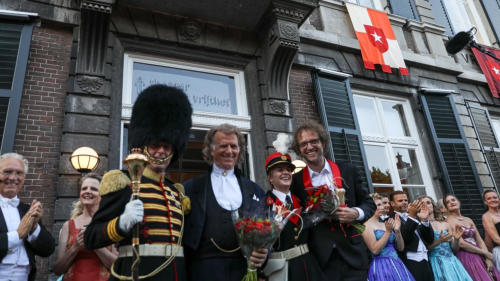
Nico Dassen and a representative of Koninklijke Harmonie Sainte Cécile Eijsden presenting André Rieu and
Pierre Rieu red flowers on the steps of the Theater on the Vrijthof, as a tribute, and a gift for Pierre's best fur
friend, Flo, a bone, on July 12, 2026
With red flower Koninklijke Harmonie Sainte Cécile Eijsden bids farewell to
Rieu; focus is now entirely on the World Music Competition
On Sunday evening [July 12, 2026], the Koninklijke Harmonie Sainte Cécile Eijsden [Royal Sainte
Cécile Harmony Band from Eijsden] bid farewell to André Rieu at the Vrijthof, as drum major Nico
Dassen presented him with a bouquet of red flowers.
For two weeks, the band performed the overtures for the concerts at the annual music festival in Maastricht.
Starting today, the Koninklijke Harmonie Sainte Cécile Eijsden will focus entirely on its participation in the
World Music Competition (WMC) in Kerkrade. In 2009 and 2013, the Sainte Cécile wind orchestra won the
Concert Division there.
Ritual
Once again, the audience—and no less so André Rieu and his Johann Strauss Orchestra—enjoyed the
impressive parade of Sainte Cécile on the square and past the terraces. Chairman Anton Janssen did the
same. Together with other representatives of the corps, founded in 1880, he watched the musicians from
across the street from Café In den Ouden Vogelstruys. Afterward, they march at a brisk pace to the steps of
the Theater aan het Vrijthof. After another serenade for the guests of the Le Theatre and Du Casque hotels,
the band pays tribute to André Rieu. Moments later, Nico Dassen—who hopes to celebrate his 25th
anniversary as drum major of De Roej (the Reds) next year—presents André Rieu with a bouquet of red
flowers. It’s a ritual that has been repeated for 20 years, but it’s still a joy to watch. That’s certainly the
opinion of the hundreds of André Rieu fans standing on the steps.
Atmosphere
While Sunday evening was spent reflecting on two weeks of impressive performances at the Vrijthof,
starting today, conductor Jan Cober will ensure that the choir’s focus is entirely on the WMC 2026. While
Nico Dassen is an icon of Sainte Cécile, the artistic director has an even longer track record. He has been
the orchestra’s leader since 1995. That long-standing leadership—both as tambour-maître and
conductor—speaks volumes about the unique atmosphere within this band.
WMC
[Conductor] Jan Cober has just over three weeks left to get Sainte Cécile ready for the big challenge in
Kerkrade. On August 2, at exactly 4:00 p.m., the concert band will once again have to give it their all to
make a run at victory in the Concert Division.
Sharing (part of) a July 13, 2026 article from De Telegraaf.
By Pieter Klein Beernink
Translation by Diana D. Le
Unforgettable André Rieu on the Vrijthof: from French village square to opera
spectacle in Verona, to exuberant German carnival session
Who has been there once, has been sold for good: a performance by André Rieu in Maastricht. Some go
to the capital of Limburg every year. Including Ger Koopmans. “This year I’m going three times!” he
reported in the midst of his guests, at one of the long dinner tables under the trees around the Vrijthof.
As chairman of LTO Nederland, he did not have to think about the nitrogen plans of the cabinet, the eco-
regulation or the new rules for goat farms: "Tonight is pure pleasure!"
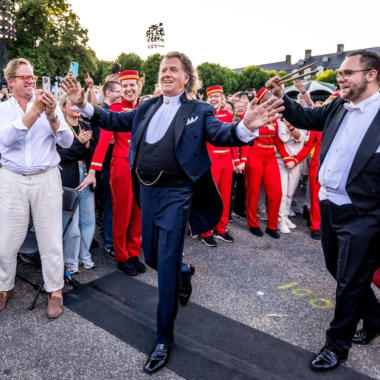
The excitement slowly built up in the enormous square near St. Servatius Basilica. A brass band marched
in from the distance, playing as they went. A moment later, André Rieu—the conductor of this musical
operation—stood with his orchestra members on the steps of the Theater on the Vrijthof. There, he stood
in silence for at least fifteen minutes, surveying the crowd while pacing back and forth in front of the
chattering violinists in their colorful dresses. The show had begun. And it would run for twelve
performances this summer!
A moment later, the orchestra members marched to the “Entry of the Gladiators" through the clapping
crowd toward the gigantic stage across the square.
Three courses had already been served.
The mood was already lively. The staff of the Italian restaurant Gio’s—which had already served and
cleared away three courses—scurried between the tables with new bottles of wine and water. Meanwhile,
the first notes drifted past the facades with their natural-stone window frames, around the historic
streetlamps, and over the white tablecloths.
“He always starts quietly,” knew Joop Atsma, who is also a regular guest at Rieu’s Vrijthof with his wife
Tea. “After the break, it goes wild.”
The beginning of the evening resembled the terraces along the Vrijthof still on a French village square.
While night fell, the concert appeared to turn to an opera spectacle in Verona. It resulted in an exuberant
German carnival session. The rhythm accelerated, a dance group waltzed between the audience and
here and there people participated.
Finally, "All Menschen became Brüder" sounded and Rieu thanked the audience. “Everything is coming
to an end!” he cried. “No!” Called back the public “Yes!” He responded and went on for a moment.
The first-year Rieu-goers in the audience packed their things and went home. However, routine visitors
knew that it was only now going to start well! A little later, Rieu drove the whole Vrijthof crazy and
everyone who could, was dancing.
No discord, no drunkenness: just fun. The music was swinging, snow made of foam flakes was falling,
torches were blazing, and the fairy-tale party continued with many more songs until the stroke of
midnight.
To never forget!
Entry of the Gladiators
Couple from Australia flew back on MH17 after André Rieu’s Vrijthof concerts:
‘When my brother told me ‘I think their plane crashed’, I said ‘what are you
talking about?’
July 17, 2026, De Limburger, by Ronald Colée
Translation: Ineke
Peregian Springs/ Maastricht
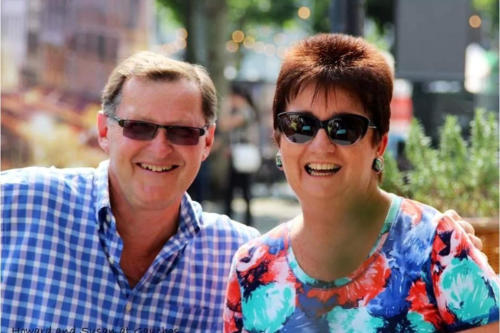
A gruesome end to five fantastic weeks. Twelve years ago, Howard and Susan Horder attended two of
André Rieu’s Vrijthof concerts, after which they returned to Australia on MH17. Now their eldest son
Matthew (51) has written a book about that devastating day and its emotional aftermath: The day the sky
fell.
In July 2014, it was the third time Matthew Horder’s parents traveled from Australia to Maastricht to attend
an André Rieu concert. Before that, they had already seen him about five times in Brisbane. But in 2010,
Howard and Susan Horder could no longer resist the lure of the DVDs featuring Vrijthof footage, wanting to
see the Maastricht orchestra conductor at work in his own city.
That first time in 2010 was so enjoyable that they repeated the same trip two more times. “It was quite an
undertaking from Australia, but because my middle brother David has been living in London for thirteen
years, they turned the second and third times into a combined trip. So, they visited my brother in England
first and then added a few weeks of vacation, concluding with a week in Maastricht.” My parents loved
Rieu's music.
At first, my brothers and I joked about it. We thought it was quite unusual that they wanted to travel to
Maastricht especially for him.
Matthew Horder himself had never heard of André Rieu. “I am more charmed by Metallica and Ed Sheeran,
but my parents loved Rieu’s music. In the beginning, my brothers and I joked about it. We thought it was
completely odd that they wanted to travel to Maastricht especially for him. A concert is a concert, and his
music sounds the same everywhere. That changed when we discovered that the atmosphere and
experience in Maastricht were truly completely different and that our parents were certainly not the only
ones traveling the world to see him in action in his hometown. They were part of a very large group of like-
minded people.”
In 2014, Howard and Susan Horder once again opted for a five-week trip through Europe. “After their visit
to my brother David, they drove through Scotland in a rental car, returned to London briefly, and then—as
the final part of the trip—spent another six or seven nights in the Netherlands. After which they would fly
back home from Amsterdam.” Judging by their messages and daily Facebook posts, it was a successful
holiday for the retired banker and insurance man and his wife, a former primary school teacher. “Dad loved
photography, but usually we didn't see those pictures until we got home.
This time, he posted something on social media almost every day, which meant we were able to reconstruct
the trip to Scotland almost day by day in retrospect. He was also very enthusiastic about Maastricht, where
they attended one concert from the square and another from the terraces.”
After spending two more nights in Amsterdam, the two sixty-somethings departed from Schiphol on
Thursday, July 17, 2014, on Malaysia Airlines flight MH17 to go home. “Dad announced that his Facebook
posts would stop. And they certainly did stop…”
At 3:20 PM, less than three hours after takeoff, the plane with 298 passengers on board was shot down
over eastern Ukraine by a Russian Buk missile. “When it became known that a plane had crashed over
Ukraine, it was the middle of the night in Australia, so I was asleep. But because David in London was in
roughly the same time zone as Ukraine, he did get the news. He first tried to reach Dad and Mom, and
when that didn't work, he called me, but I had my phone on silent. So, he tried our youngest brother Adam,
who lived in Melbourne. He did answer. After that, they both tried to call me several times.”
Missed calls
When Matthew finally got up at six o'clock in the morning, he had a whole laundry list of missed calls on his
phone. "Because Adam was in the same time zone as I was in Brisbane, I called him, to which he said, 'I
think Mom and Dad's plane crashed.' I said, 'What are you talking about?' I turned on the TV and saw that it
was MH17, and I knew that was their flight number. When I also checked the departure time from
Amsterdam and found that to be correct as well, I realized that it really was their scheduled flight."
Matthew decided to call the Department of Foreign Affairs and Trade in Canberra immediately. "It took
forever to get someone on the line there. They took down my details and promised to call me back as soon
as there was more clarity." His wife Holly asked what was wrong. “When I told her that the plane with my
parents on it had presumably crashed, she first looked at me in disbelief, then hugged me tightly and asked
if there was anything she could do. To which I responded very matter-of-factly, probably in shock, with
‘Could you take the children to school?’”
Matthew drove to his mother's parents himself to deliver the bad news. "And after that, I went to my
parents' house to see if I could perhaps gather any other information there that might suggest they hadn't
been on board after all. But that was, of course, completely useless. Between four and five in the afternoon,
I received confirmation from the Foreign Office that my parents were indeed on the passenger list."
On the way back, he picked up his children Sophie and Josh from school. "They were 7 and 5 years old at
the time and had always been very close to my parents. So, I knew I had to tell them this before they heard
it from someone else. And I also knew I had to do it honestly and not sugarcoat the message. I didn't do
that either. Although I didn't say their plane had been shot down, but that it had crashed."
To this day, the manager of sports infrastructure for the state of Queensland considers that the hardest
thing he has ever had to do in his life. “But I am glad I did it. Because when I turned the TV back on, my
parents appeared large in a photo on screen. How was that possible? I have my suspicions. I think
someone from Malaysia Airlines sold the passenger list, after which journalists started scouring social
media to give the victims a face. You wouldn't believe how many phone calls I received that day from
journalists asking for confirmation and a reaction.” I think someone from Malaysia Airlines sold the
passenger list, after which journalists started scouring social media to give the victims a face. That photo on
TV turned out to be the final piece of confirmation for him as well.
What followed was a terrible time, as he describes it himself. “You feel so helpless and powerless. You find
yourself in Australia while the plane has crashed in Ukraine. That is so incredibly far away, and also a very
dangerous and unstable area. You can’t just hop on a plane and go there. In the end, my brothers and I
were only able to hold the funeral on September 25, almost two and a half months later.” Still, given the
circumstances, that is quite quick. “But normally, when a loved one passes away, the burial or cremation
follows within one or two weeks, and you can pick up your life again fairly quickly afterward.
Now, we were assigned a liaison officer who called us every day for two and a half months to keep us
updated. Even when there was no news.” Matthew and his brothers were also assigned a federal police
officer who came to visit them at home regularly. “David had boarded the plane to Australia on the very day
of the crash. And Adam came over immediately from Melbourne. So, when the police arrived at the house
for the first time, all three of us were home.”
Memorial service without bodies
Four weeks later, on Friday, August 15, the brothers held a memorial service in a dance hall in Eatons Hill.
"To celebrate my parents' lives. Even though their bodies had not yet been recovered at that time." Seven
hundred people attended the memorial service. Singer Mirusia Louwerse, whom Matthew's parents had
met during their visits to Rieu's concerts, also attended the ceremony and gave a speech at their request.
Matthew is glad that he and his brothers held that memorial service. "It was very nice to see old photos and
reminisce. That provided a counterbalance to all those gruesome and terrible stories that were coming out.
It is important in life to focus on the beautiful things anyway."
Coincidence or not, that very same evening they received a call from the Ministry of Foreign Affairs with the
news that their mother had been identified. “They asked us what we wanted, whether they should take her
home or not. Because Dad hadn't been identified yet at that time, we asked if they wanted to wait for that.
That wasn't a problem at all. Five days later, Dad was identified as well, and my brothers and I boarded a
plane almost immediately to pick them up.” He falls silent for a moment. “I have never cried so hard as I did
then, upon arrival at funeral home Westgaarde in Amsterdam, when the family of five was together again
for the first time.”
Matthew is full of praise for how the authorities in the Netherlands and Australia handled everything. “At
Westgaarde, my brothers and I were assigned a separate mourning room where we could say goodbye to
our parents. We were even asked if we wanted background music, to which we asked if it could be music
by André Rieu. That was allowed.” The three brothers were also each given a moment to themselves.
“I told Dad and Mom then how the children were doing.”
National flag
Along with seven other bodies, Howard and Susan Horder were eventually taken to Australia by military
transport plane with the national flag draped over their coffins. “David, Adam, and I flew simultaneously
from Schiphol to Melbourne to welcome them there. And as strange as that may sound, we are very happy
that they went on a journey together and came back together.”
Finally, an official farewell was said to their parents on September 25, after which, eight months later, on
May 9, 2015, their ashes were scattered over the sea near the town of Mooloolaba on the Sunshine Coast.
Because Matthew and his brothers did not want the repatriation flight to be their last memory of the
Netherlands, they decided to travel to the Netherlands one more time a year after the disaster to show their
families where Grandpa and Grandma had had such a wonderful time. This included a visit to a Vrijthof
concert by André Rieu and his Johann Strauss Orchestra. “We were assigned a room at Hotel Du Casque
on the Vrijthof from where we could overlook the entire square. We were able to watch the concert there for
three consecutive evenings. Twice from our hotel room and once from the square.” For the man who
prefers listening to Metallica or Ed Sheeran, that day on the square became an incredible experience. “One
of the best concerts I have ever seen. Not only in terms of singing and music, but also because of
everything surrounding it.” Prior to the show, the brothers and their family were invited to the Theater aan
het Vrijthof, where they received a DVD from Pierre Rieu containing all the footage of their parents during
the three visits to the Netherlands. "I think it involved a total of seven or eight different clips in which we saw
our parents clapping, singing, and dancing, happy and excited."
During the concert, they were sitting in row seven or eight. “At one point, Mirusia came on stage to sing a
song. Wishing you were somehow here again. She didn't say anything, but she did look at us, and I am
sure she sang it especially for us that evening. Naturally, the tears came then; that moment felt truly
special.”
After the visit to Maastricht, they also visited the other places their parents had been. “We took selfies at the
same locations, ordered strawberry pie at the same place, and ate at the same restaurants. One of them
was restaurant Moeders in Amsterdam, where they have a wall of fame with framed photos and snapshots
of their mother. “We had also brought a photo of our mother. It is still hanging there.”
Although he has been to the Netherlands a few more times since 2015, he has never visited Maastricht
again. However, in 2016, he did attend a Rieu concert in Brisbane, at the Brisbane Entertainment Center.
“Thanks to Mirusia, we were assigned very good seats there, and afterwards we were allowed to meet
André backstage for a brief moment. It was a beautiful concert, but it couldn't compare to that evening in
Maastricht. Nevertheless, that meeting led to Sophie – who was 9 years old at the time – starting to play
the violin.”
Ten years after that last concert and twelve years after that fateful day, a book has now been published: The
Day the Sky Fell. “I don’t consider myself a writer. In the first few months after that act of terror, I was mainly
occupied with the memorial service, bringing my parents back, and the funeral. Yet even then, I realized that
I actually had to write down everything I was experiencing.
Because although we were ordinary people, the things happening to us were extraordinary. I mean: the
Prime Minister calling you when your parents die—that’s not exactly normal.” Initially, the notes were
primarily intended to document everything. Specifically, as a memory aid for the children later on. “Not to
publish it. Until a friend who was an editor and helped me organize everything read my texts and said: I
would publish it.”
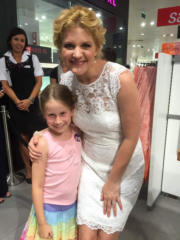
Sophie, Matthew Horder's daughter, poses with
Rieu singer Mirusia Louwerse before the start of
the Vrijthof concert in 2015.
© Horder family private archive
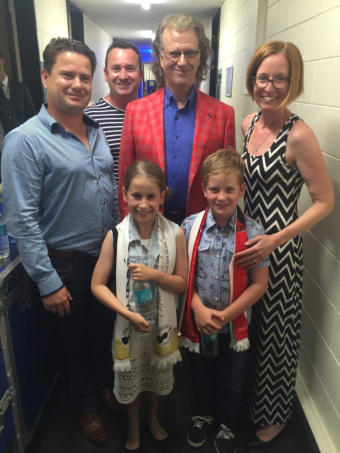
Matthew Horder, his brother
David, his children Sophie and
Josh, and his wife Holly were
able to meet André Rieu
backstage at the Brisbane
Entertainment Center for the first
time in 2016.
© Horder family private archive
In loving memory. More information about the book, click HERE.
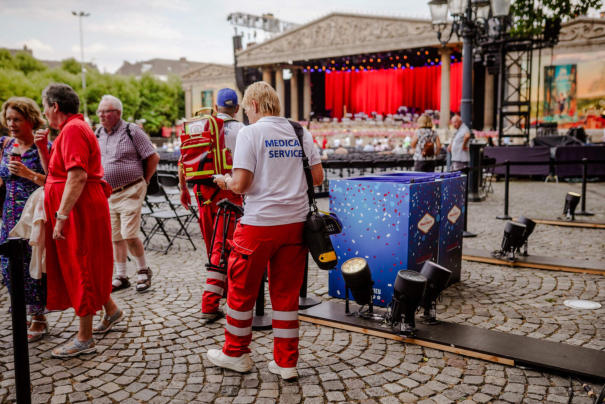
Medical Care Report,
July 18, 2026,
De Limburger, by Kyra Volkers,
Translation: Ineke
© Mitchell Giebels
Thousands of elderly people on a hot square, it's hard work for the first aiders
at André Rieu's Vrijthof concerts: 'Some arrive in Maastricht already sick'
A packed parking lot for walkers reveals that the average visitor to an André Rieu concert at the
Vrijthof in Maastricht is no longer very young. That is why a massive medical operation is
underway behind the scenes. "We try to remain as invisible as possible."
"Strange, no one has fallen over yet." The man in yellow-red trousers squeezes his way through the
crowd. It is 6:32 PM. Over the past hour, perhaps hundreds of André Rieu fans have been queuing for the
terraces in Maastricht. The average age is high, the sun is severe. "Most of them have already been
strolling through the city all day," notes Jos Euwes. "As soon as the gates open, people always feel
unwell." Not today, and so we continue our route to the main post.
Recognition
"You here again too!" shouts one of the security guards. Euwes is a familiar face at the Vrijthof at this
time of year. The company he works for, Bosec, has been providing medical care at Rieu's Vrijthof
concerts for eight years. "The nice thing is that we run into the same people at every edition."
In the Hoofdwacht (Main Guardhouse), the crew is divided into six teams. In the theater, there is a special
first aid post for staff from the performances: bellhops (piccolos,) whose blisters need to be pricked or
dancers who want to give their best performance despite injuries. Two first aiders cycle back and forth to
the Markt, where about two thousand visitors disembark from the buses.
Emergency scenarios are ready, for example, in case everyone needs to be evacuated to the empty
parking garage. The entire operation was mapped out six months ago. A large screen full of figures and
graphs. ‘Total: 254’ – the number of patients the team has treated in two weeks. 16 of them ended up in
the hospital. “People often don’t realize what happens behind the scenes of an event like this,” nods co-
owner David Hoogerwerf. “There are 12,000 people on the Vrijthof. That is the population of a small
municipality.” Voerendaal, for example, but then – judging by the overcrowded walker parking lot – with a
significant aging problem.
The first aiders at André Rieu are very busy. © Mitchell Giebels
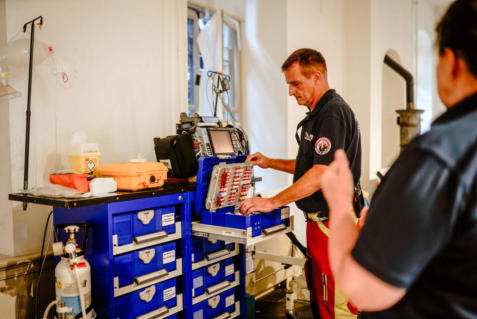
Vomiting
A German woman in a long blue dress stumbles in, heels in hand. Eight minutes before the show, her
dinner came back up. She is given a bag and answers a series of questions. The hardest part, the
attending GP explains, is that you have no knowledge of the case file. For instance, you can give someone
who has eaten something wrong a tablet for nausea, but if the vomiting is caused by something in the brain,
that is pointless. Anyway: the woman in the blue dress hurries back onto the square, only to trickle back in a
few minutes later, looking unwell. What you often see, Hoogerwerf explains, is that people downplay their
complaints. "Many come here from Austria or Australia already sick, in a state where you actually cannot go
to a concert. But they have saved up for years for Rieu; it is a once-in-a-lifetime thing."
An 80-year-old man falls ill in the middle of the Vrijthof. The piccolos signal security guards, who alert one
of the first aid teams on the square. A phone call goes to the control room, where the police and
municipality are also represented. Then the report reaches the main station. It sounds cumbersome, but a
wheelchair is on its way in no time, because stretchers don't roll very smoothly on cobblestones. “And we
try to remain as invisible as possible,” says Euwes.
“Last week, someone felt unwell on the terrace of the Vogelstruys café. We had to approach him via the
back of the stage.” The crew knows exactly where the cameras are positioned and tries to ensure that as
few fluorescent suits as possible appear in the footage. What makes a Rieu concert different from other
events? “The atmosphere,” says Euwes. But also, all the extras this target group asks for. Which
performance arranges for people to hand out walkers? “And everyone wants to sit through the show, you do
everything you can to make that happen,” says Hoogerwerf. But it does mean you have to carry out many
more interventions on the spot. Fortunately for the crew, that happens in relative luxury. “This is something
different from a small tent in the mud of a festival site.”
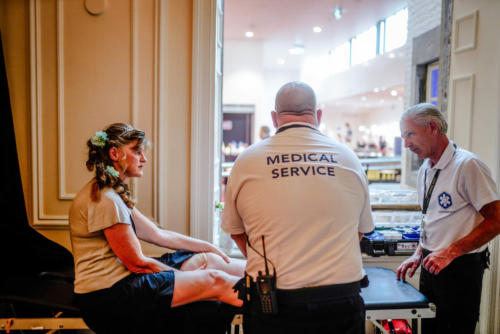
The team also helps many of Rieu's dancers; for instance, there is a separate post in the theater.







- Maastricht Dinnertime
- Maastricht Preparations
- Tickets & accomodation
- Ticket Mediation
- Trains from Amsterdam Schiphol
- Trains from Brussels, Paris, Frankfurt and London
- Maastricht Fan Dinner
- Maastricht Fan Picnic
- Maastricht City Walks
- Maastricht Mosasaurus
- Daytrips from Maastricht
- Vrijthof news
- Maastricht Bonbonniere
- Maastricht ENCI quarry

- 2026 - 2030
- 2021 - 2025
- Previous items 2025 Jul - Dec
- Maastricht 2025
- Previous items 2025 Jan - Jun
- Previous items 2024 Jul - Dec
- Index of this period
- Doctor Peter de Beer
- Phil Bee
- Carlo Bonnie
- André’s Castle De Torentjes
- André gets his own stamp
- Typewriter artist
- Duo X-Elle
- Cinema experience 2024
- Quote Business Magazine
- Concerts in Bogotá, Colombia
- Margriet Magazine (1)
- Margriet Magazine (2)
- André Rieu turns 75
- André’s 75th birthday party
- Concert in Milano
- Roadsoap 5
- Presentation of second biography
- Het Financieele Dagblad
- 2024 Christmas concerts
- Interview with Marjorie
- Interview with André Rieu
- Interview from Nous Deux
- Dorona Alberti looks back
- Maastricht 2024
- Previous items 2024 Jan - Jun
- Index of this period
- Kimberly Smith
- Amsterdam New Year's concert
- MAX Magazine
- Stradivari instruments
- Golden Carriage
- Bahrain concert
- Ineke's book
- Emma's birthday in Greece
- Organic carrots
- Mexico Illness
- New animated series
- Trio SAAMN
- Andre Rieu in cinema 2024
- Sculpture of Andre Rieu
- Making of the bull
- Book 75 year Andre Rieu
- Previous items 2023 Jul - Dec
- Maastricht 2023
- Previous items 2023 Jan - Jun
- Previous items 2022 Jul - Dec
- Index of this period
- December with André
- Ivo on Sunday
- World Record Academy
- Privé / Telegraaf
- Two Vienna concerts
- Pierre Kartner (Father Abraham)
- Shellfish from ENCI quarry
- Zagreb concert
- Great Maastricht Dictation
- South America Tour
- Tribute to Queen Elizabeth II
- Rose Festival in Lottum
- Photo exhibition William Rutten
- Fake tickets on sale
- L1 interview
- Rieu and the Royals
- Interview with Pierre Rieu
- Efteling News
- Announcement Christmas concerts
- Boundlessly popular
- Maastricht 2022
- Previous items 2022 Jan - Jun
- Previous items 2021 Jul - Dec
- Index of this period
- LINDA's Winterguests
- Max Verstappen World champion F1
- Lisbon concerts
- Christmas cinema movie
- Koffietijd program
- Christmas concerts 2021 postponed
- Mindfuck
- ARD1, Club1 program
- Promoting Portugal tour
- Limburg Central article
- Andre's birthday
- Kingsday 2022 in Maastricht
- Podcast: weird hit wonder
- NDR talkshow
- 10 Christmas concerts in the MECC
- Vera Russwurm interview
- Flooding benefit program
- Humberto interview
- Flooding in Limburg
- Two best friends, Andre and Andre
- Previous items 2021 Jan - Jun
- Index of this period
- Maastrichts dialect
- Playing again!
- OP 1 Interview
- Vrijfhof 2021 concerts postponed
- Covid Vaccinations
- EVC Congress
- Julia and Kathy
- L1 Interview
- 3 AW Nights interview
- Dutch Bake-Off
- Chinese Interview
- Rijsemus Violin builder
- Al-Jazeera Interview
- Blaaskracht
- PRESS info
- Happy New Year
- 2015 - 2020
- Previous items 2020 Jul - Dec
- Previous items 2020 Jan - Jun
- Previous items 2019 Jul - Dec
- Maastricht 2019
- Previous items 2019 Jan - Jun
- Previous items 2018 Jul - Dec
- Maastricht 2018
- Previous items 2018 Jan - Jun
- Index of first half 2018
- June 26th, VNG Congress
- May 13th, Duckrace
- May 12th, Professor Scherder
- May 11th, Time for Max
- Bulgaria concerts
- Fake Rieus
- April 2018, Tel Aviv
- East USA Tour
- MDR Um 4, March 26th,2018
- May 9th, Sandy beach radio
- Universal Music Award
- Semper Opern Ball
- New Years Concert Amsterdam
- Previous items 2017 Jul - Dec
- Lift-Off Splash Percussian School
- Index of 2nd half 2017
- Carmen Nebel show
- Christmas Events 2017
- Interview with Frank Michael
- Celebrity Radio interview
- UK Tour 2017
- USA Tour 2017
- German Tour 2017
- Q&A with fans on Facebook
- Sunday Night Interview
- Mexico Donation
- Day-Time in Maastricht
- RTL Helemaal het einde
- ARD Brisant
- NDR Tietjen and Bommes
- Making of Cinema video
- Maastricht 2017
- Previous items 2017 Jan - Jun
- Index of first half 2017
- Interview with Steven Wright BBC2
- Portrait of a Passion
- The "Real" Andre Rieu
- Welcome to my World 2
- Double interview Andre Rieu and Jo Cortenaedt
- Mirusia "From The Heart"
- Larura Engel "En Canto"
- Refugee brought Andre Rieu success
- Carla Maffioletti "A Dream"
- Venetian Carnival Revelers
- Golden Oldie from 1985
- Agnes Fizzano's shop
- Carnival speech Mayor of Maastricht
- Maastricht Pastry Route
- 2017 Valentines day
- Rieu plays in Semper Oper Dresden
- Linda Custers, Princess Carnaval
- New Years concert Ziggo Dome
- Ziggo Dome rehearsal
- Previous items 2016 Jul - Dec
- 2016 Jul - Dec, Index
- SBS6 Stars Surprise Show Dec 21st, 2016
- Liverpool december 2016
- Magic Maastricht 2016
- BBC Breakfast Today Show
- ARD Advent Show
- Two Million Likes
- CinemaLive Christmas
- SWR 4 German TV
- Strictly Come Dancing
- The meaning of life
- Leute Heute
- Dancing with the Stars
- In Conversation
- Free Mini Concert in Maastricht
- L1 Radio Interview
- Josti Band 50 years
- NDR Talk Show
- New Maastricht Salon orchestra
- Rieu in Cinema
- Maastricht 2016
- Previous items 2016 Jan - Jun
- Previous items 2015 Jul - Dec
- 2015 Jul - Dec, Index
- Rieu entertainment
- Dec. 2015, Bild Star Magazine part 4
- Dec. 2015, Bild Star Magazine part 3
- Dec. 2015, Bild Star Magazine part 2
- Dec. 2015, Bild Star Magazine part 1
- Nov. 17th, 2015, RTL Boulevard
- Nov. 12th, Shownieuws
- Nov. 16th, Loose Women
- Oct. 30th, Colectiv Club Fire, Bucharest
- Roman Holiday (3)
- Roman Holiday (2)
- Roman Holiday (1)
- Oct. 26th, Classic FM Q&A
- Oct. 23rd, MDR at 4 PM
- Oct. 10th, Jubilee Award
- Sep. 19th, 2015, Carmen Nebel
- Maastricht 2015
- Previous items 2015 Jan - Jun
- 2015 Jan - Jun, Index
- Code M, the movie
- Bucharest Concerts Part 1
- Bucharest Concerts Part 2
- A Latin Breeze
- Maestro without borders
- Copenhagen Concert
- Brazilian Fans
- George Harper In Memoriam
- Press Conference Romania Open Air Concerts
- RTL Late Night Show
- AvroTros TV Show
- Cologne Concert
- Valentine's day
- Tempeleers Carnaval Medal
- Markus Lanz Talk Show
- 2007 - 2014
- Previous items 2014 Jan - Jun
- Maastricht 2014
- Maastricht 2014, The Preparations
- Maastricht 2014, (Dress) Rehearsal
- Maastricht 2014, The Concerts
- Maastricht 2014, Fan Dinner
- Maastricht 2014, Three Fan Picnics
- Maastricht 2014, Lift-Off
- Maastricht 2014, Exhibition Marc Rieu
- Maastricht 2014, Our Story Page 1
- Maastricht 2014, Our Story Page 2
- Maastricht 2014, Venetian Carnival, the making of
- Previous items 2014 Jul - Dec
- Previous items 2013 Jul - Dec
- Advent Calendar 2013
- Spirit of Christmas
- Nelson Mandela
- Movie Marina
- BBC Breakfast Show
- German TV programs (1)
- German TV programs (2)
- L1 Late November 5th, 2013
- RTL Boulevard, October 31st, 2013
- Amira Willighagen
- Evenblij with....
- Australian tour 2013
- German TV Sept.2013
- ORF Vera Russwurm
- Jean-Philippe composes ode to Mary
- Tietjen and Hirschhausen 2013
- Rieu to play on North Pole?
- Maastricht 2013
- Previous items 2013 Jan - Jun
- RTL Boulevard June 19th, 2013
- Jean-Philippe's children's books
- What I know about women
- AR-Academy
- Copenhagen concert
- SkyArts2
- Limbourgeois April 30th
- The making of the Coronation concert
- King's inauguration Day 2
- King's inauguration Day 1
- King's Waltz
- Charity TV broadcast
- classicFM interview
- Trini Lopez
- Jean-Philippe's book
- Jermaine Jackson
- Dutch Queen Abdicates
- history fan websites
- Cologne, Jan.1st 2013
- Previous items 2012 Jul - Dec
- Limbourgeois 25 December 2012
- Chistmas in Birmingham
- Linda Magazine, December 2012
- Advent calendar
- Cinema Heerlen 2012
- Boulevard Nov 21, 2012 and Ajax
- André's Birthhouse
- UK TV Programs November 2012
- Classic Brit Award
- Andre in Brazil 2012
- Interview Dolman Rieu
- BVN Trophy 2012
- Westland Fruit and Flower parade
- L1mbourgeois August 19, 2012
- Maastricht concert 2012
- Previous items 2012 Jan - Jun
- Previous items 2011 Jul - Dec
- Maastricht 2011
- Previous items 2011 Jan - Jun
- The person behind the phenomenon
- Andre and Hopkins
- Interview in Vienna
- Frank Steijns and "Normaal" band
- PBS visiting Maastricht 2006
- Amsterdam ArenA 2011
- Pierres Hobby
- DWDD May 26th, 2011
- Madiwodovrijdag show
- André Rieu and Anthony Hopkins
- Mirusia DVD release
- Scary moments in South Africa
- BUMA Export award 2010
- Interview with Mirusia
- WDR swap reporter
- Previous items 2010 Jul - Dec
- Platin Tenors at the Cologne Christmas market
- Koffietijd December 20th, 2010
- Christmas concert by Mirusia
- Today Show December 18th, 2010
- Ice Sculpture Maastricht 2010
- The André Rieu Story
- UK November 2010 appearances
- Mexico City, November 28th, 2010
- Ivo Niehe interviews André Rieu after his illness
- André is Back!!
- LeuteHeute 151110
- André is rehearsing again
- First interview after sickness
- André cancels UK and Aussie 2010 tour
- Jubilee book 30 years André Rieu
- Interview with Pierre about André's ilness.
- Three hours marathon interview
- André escapes Toronto
- Previous items 2010 Jan - Jun
- Maastricht 2010
- Maastricht Winery, South Africa
- The best of Thirty Years André Rieu
- Mainau 2010, "Roses from the South"
- Dancing on Ice, 2010 UK finals
- Maastricht Stampsheet
- André to play for Queen Beatrix of The Netherlands
- At home with Bela Mavrak
- Export award 2009
- Farewell mayor Leers
- Flikken Maastricht
- Cologne 2010 concert
- Previous items 2009
- André and Friends ArenA 2009
- André's 2009 Christmas interview
- Christmas with Carmen Nebel
- Frank Steijns carillon
- Dutchman of the Year 2009
- Royal Variety Performance
- Brisant
- Dreams come true
- André's twins
- MDR André 60th birthday interview
- Sydney Oct.2009
- Ivo Niehe's interview with Mirusia Louwerse
- Maastricht Liberators
- Heidelberg September 2009
- Maastricht 2009, the concert
- Maastricht 2009 update
- America Tour 2009
- The week of André Rieu
- André in Villa VANTHILT
- Boulevard and Knevel and van den Brink
- André Rieu about New York
- Carmen Nebel in Maastricht
- André named best selling male artist
- André Rieu Stamp Booklet
- Maastricht 2009
- Interview with André on RTL9
- Marc Rieu, the other son
- Andre Rieu on his way to Australia
- André and Vegemite
- Ruud and Ineke meet Kathi (Caramia)
- Road Soap review
- André in de ArenA
- André get awards
- Good afternoon Limburg
- van der Vorst ziet sterren
- Previous items 2008
- Australian interviews with André
- Holiday in Australia
- Ivo Melbourne
- From Maastricht to Melbourne
- Interviews December 2008
- Melbourne Concert 2008
- Trier 2004
- Dresden
- Kerner and Nebel
- Maastricht but different
- Maastricht Vrijthof concert 2008, the highlights
- 60 Minutes, André Rieu and Andrea Bocelli
- Maastricht 2008 concert
- Aussie Interviews
- André in Ottawa
- Andre Rieu Tulips in Ineke's garden
- Ovation-Schofield
- De Rode Loper
- Boulevard
- Riverboat
- The Last Show
- Benny Neyman
- Ivo Niehe March 2008
- Kruispunt
- Tietjen and Dibaba
- Toronto by Alice Leung
- Toronto 2007
- Cologne 2008 concert
- Previous items 2007

- Agnes Fizzano-Walter
- Anna Majchrzak
- Anna Reker
- Annabelle Traves
- Béla Mavrák
- Bibi Ortjens
- Boris Goldenblank
- Brass section
- Carla Maffioletti
- Carmen Monarcha
- Christina Petrou
- Cord Meyer Leusink
- Donij van Doorn
- Els Mercken
- Emma Kok
- Frank Steijns
- Gary Bennett
- Gosia Tarnowski
- Gracenotes
- Jean Sassen
- Joline Soomers
- Justinas Kaunas
- Kimmy Skota
- Kremi Minerva
- Laura Engel
- Lift-Off (Marcel Falize)
- Maastricht Salon Orchestra
- Maja Jasinska
- Marcel Falize
- Manoe Konings
- Marc Rieu
- Michaela Oeste
- Michel Tirabosco
- Mireille Brepols
- Mirusia Louwerse
- Night of the Proms
- Pierre Rieu
- Platin Tenors
- Rene Henket family
- Roger Diederen
- Romano Diederen
- Ruud Merx / Lin Jong
- SAAMN trio
- Sanne Mestrom
- Serena Vanheuverswijn
- Stéphanie Detry
- Suzan Erens
- Tanja Derwahl
- Tiroler ohne Berge (Marcel Falize)
- VerrasSing
- Vincenzo Viola



- 2000 - 2009
- 2009: Andre meets Mr. Wijdbeens
- 2006: Josti Band
- 2006: Profiel
- 2005: Art Express Classic
- 2005: Interview with Catherine Keyl
- 2004: Portrait of a Passion
- 2004: André van Duin meets André Rieu
- 2004: Trier concert
- 2004: Rehearsal for Tros 40 year song
- 2003: Barbara Wussow
- 2002: TROS Cruise
- 2002: Barend en van Dorp
- 2001: José Carrera Gala
- 2001: The Ländler
- 2001: Open House
- 2000: BZN meets André Rieu
- 2000: A Dream Come True
- 1989 - 1999
- 1999: Andre @ Spanish RTVE
- 1999: Laat de Leeuw
- 1999: Alfredissimo
- 1998: Lesley Garrett
- 1998: Celebrities
- 1998 Early JSO
- 1997: Strauss Party - Kiel
- 1997/98 Bill's oldies 2
- 1997/98 Bill's oldies 1
- 1997: Im Krapfenwald
- 1996: Snow White, a fairytale
- 1996: André Rieu "In Concert"
- 1996: Charity Concert
- 1995 André and André
- 1995: Wiener Melange - Lübeck
- 1995: Karel van der Graaf
- 1995: Musikantenstadl
- 1995: TROS Op nieuwe toeren
- 1995: Carré Theatre (The Vienna I love)
- 1995: Veleta
- 1995: TVcommercial/A.van Duin
- 1995: First videoclip
- 1995: Angela's Challenge
- 1994: Schutterij EMM Ooy
- 1994: Strauss & Co
- 1994: Olympic Stadium
- 1992: Before he got famous
- 1989: Tineke's TV years
- Tour Programs 1987/88
- Tour Programs 1994/95
- 1985





